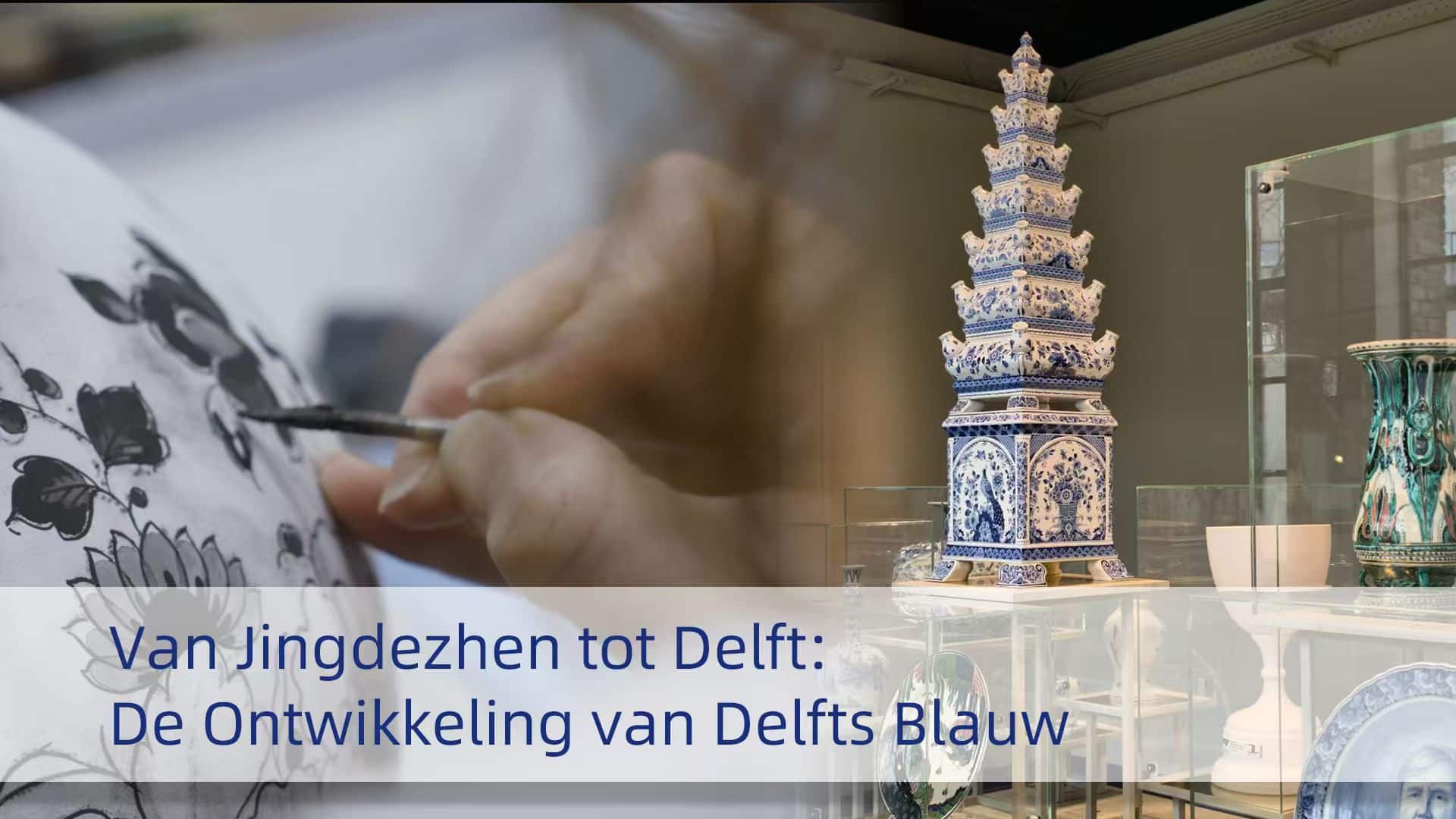
For many, Delft Blue feels like a quintessentially Dutch symbol: the soft blue tones, the elegant patterns and the traditional craftsmanship. But behind this familiar image lies a surprising origin. The story of Delftware does not begin in the Netherlands, but in China. In this video, we take you on a journey through centuries of global trade, artistic development and cultural exchange, from the kilns of Jingdezhen in China to the canals of Delft.
Long before Delft pottery existed, Chinese porcelain was already travelling to Europe via the Silk Road and was imported in large quantities by the Dutch East India Company. It became a sought-after status symbol among the elite and found its place in Dutch parlours, where blue and white bowls and plates reflected the fascination with this distant art form.
As demand for porcelain increased, Dutch potters began to experiment more and more. They did not work with porcelain, but with earthenware, and yet managed to capture the elegant blue motifs with cobalt blue pigment, just like in China. Around 1600, a new art form emerged: Delft blue, a product that is now deeply rooted in Dutch identity. Although the craft is modernising, the process – from casting and shaping to painting and firing – remains recognisably traditional.
The video shows how this cultural dialogue continues to this day. From Dutch tulip vases to modern hotels that incorporate Delft Blue into their interiors.
Curious about the whole story? Watch the video and discover how two cultures have been inspiring each other for centuries.